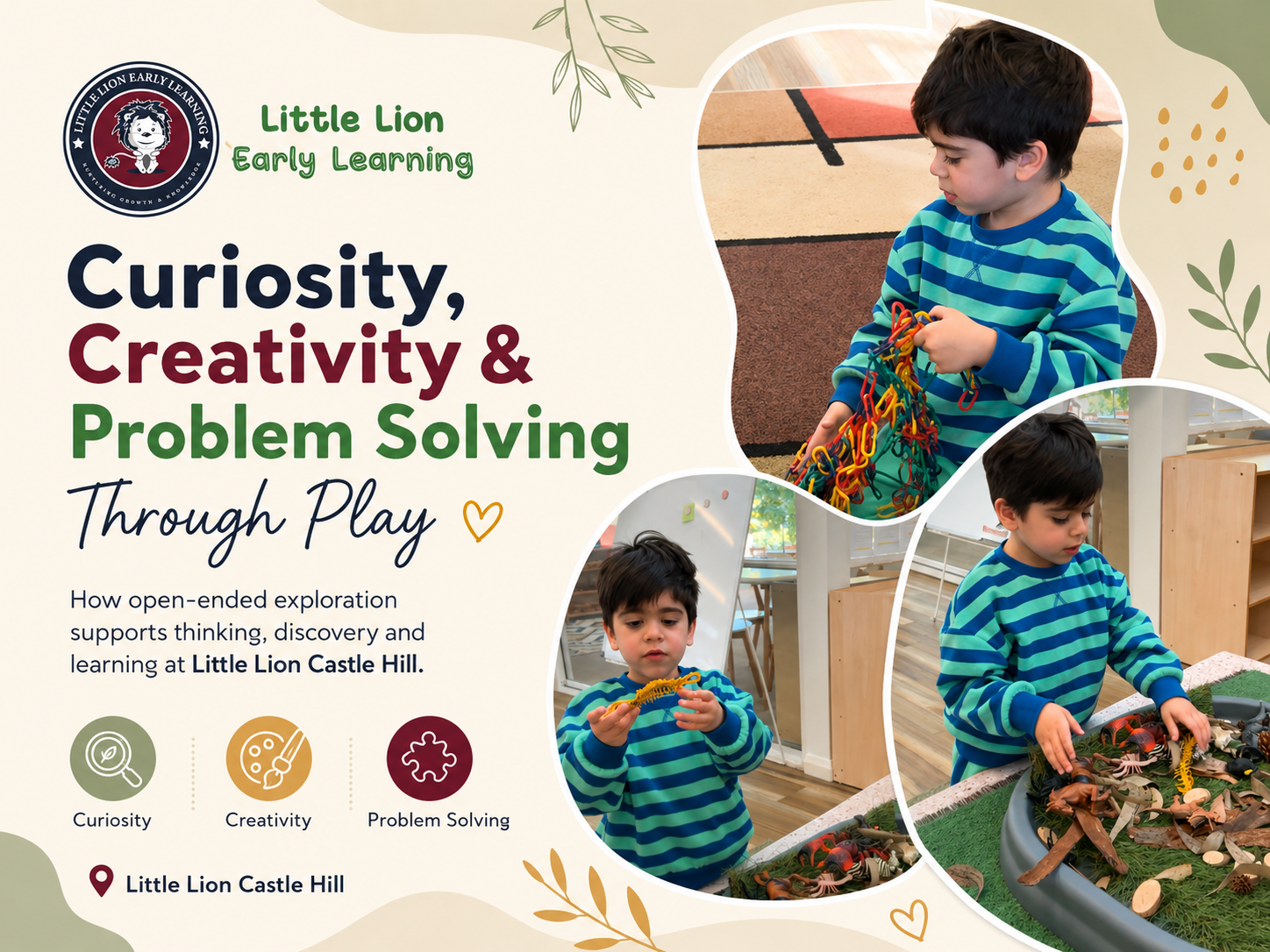
Children are naturally curious. They notice small details, ask questions, test ideas and explore the world around them in ways that may seem simple to adults but can be deeply meaningful for learning.
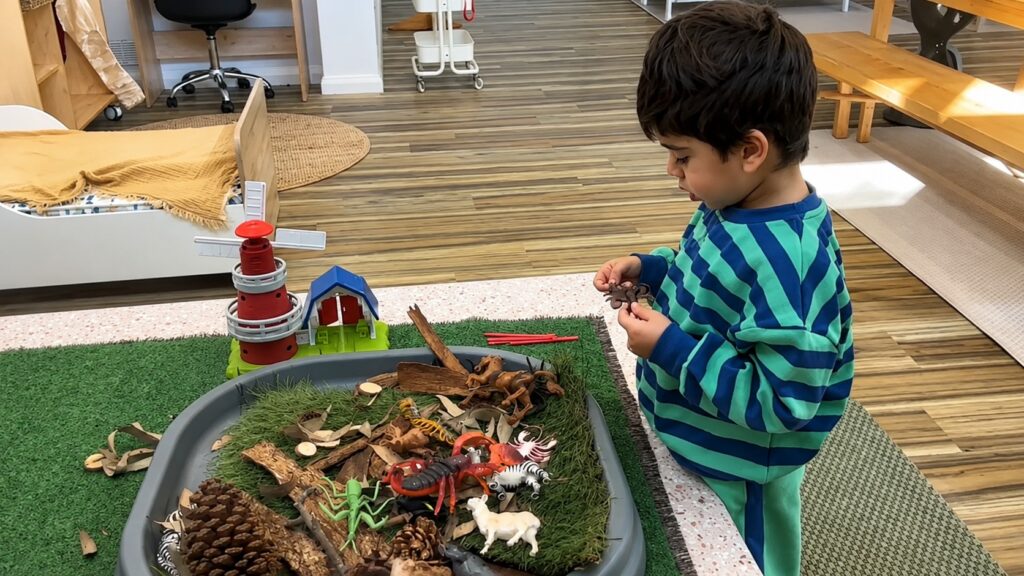
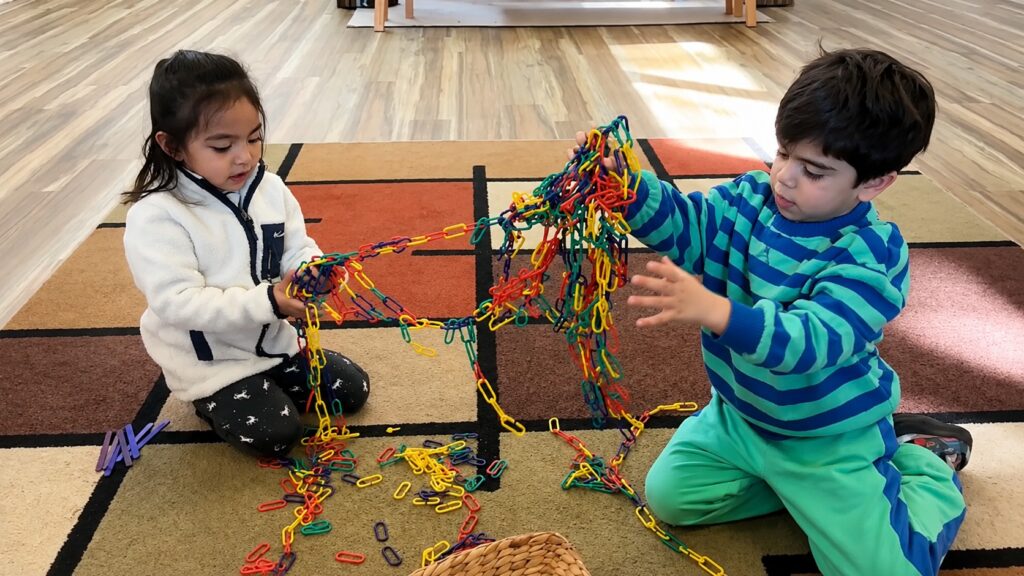
The images from Little Lion Castle Hill show this clearly. A child explores natural materials, animal figures and open-ended resources, while another experience involves linking and manipulating colourful pieces. These moments may look like play, but they can support thinking, communication, creativity and problem-solving.
For families considering childcare in Castle Hill, it is useful to understand how everyday hands-on experiences can contribute to early learning without needing to look like formal lessons.
Why Curiosity Matters in Early Childhood
Curiosity encourages children to investigate.
A child may pick up an object, turn it around, compare it with another item or try to work out how it fits into an activity. Each of these actions involves observation and decision-making.
Curious children are not simply waiting to be shown what to do. They are actively trying to understand what is happening around them.
This can support:
- Independent thinking
- Problem-solving
- Language development
- Imagination
- Confidence
- Persistence
When children are given time to explore, they can build their own understanding through experience.
Hands-On Play Encourages Problem-Solving
Problem-solving begins long before children encounter formal classroom tasks.
It can happen when a child is deciding how to connect objects, how to build something, where a piece belongs or how to use a material in a new way.
In the activity shown, the child is working with flexible linking pieces and open-ended materials. Experiences like this can encourage children to test ideas and make changes as they go.
They may ask themselves:
“Will this connect?”
“What happens if I move this?”
“Can I make it longer?”
“What could I use next?”
This kind of thinking helps children understand that there can be more than one way to approach a challenge.
Open-Ended Materials Support Creativity
Some resources have one clear purpose. Others can be used in many different ways.
Open-ended materials allow children to decide what they want to create or explore. Natural materials, animal figures, loose parts and construction resources can all support this kind of play.
One child may sort objects. Another may create a story. Another may build a small environment or investigate textures.
There is no need for every child to produce the same result.
That freedom can support creativity because children are not simply copying an adult example. They are developing their own ideas.
For families exploring a preschool in Castle Hill, it can be helpful to look at whether children have access to resources that encourage imagination and choice.
Learning Through Comparison and Observation
Children also learn by comparing.
They notice differences in colour, shape, texture, size and function. They may group similar objects together or point out something unusual.
In a nature-based or sensory activity, children might compare leaves, bark, pinecones, figures or other materials.
This type of observation can support early thinking skills because children begin to recognise patterns and relationships.
Educators can extend this naturally by asking simple questions such as:
“What do you notice?”
“Which one feels different?”
“What do you think this could be?”
“What might happen next?”
These questions can encourage deeper thinking without taking control of the activity.
Language Develops Through Exploration
Hands-on play also creates natural opportunities for communication.
Children may describe what they are doing, name objects, ask for help, explain an idea or listen to another child.
Even when a child is focused quietly on an activity, language can be supported through responsive conversation with educators.
For example, an educator may introduce words such as:
- Smooth
- Rough
- Long
- Short
- Connect
- Compare
- Build
- Balance
- Under
- Over
These words become more meaningful when children experience them while actively playing.
Confidence Grows Through Making Choices
Confidence often develops through small decisions.
A child chooses which object to pick up, where to place it, whether to try again or how to continue an activity.
These decisions may seem minor, but they help children practise independence.
When adults allow children enough time to think and respond, children can begin to trust their own ideas.
This is an important part of learning through play.
For parents looking at daycare Castle Hill options, it can be useful to notice whether children are encouraged to make age-appropriate choices rather than being directed through every part of an experience.
Social Learning Can Happen Naturally
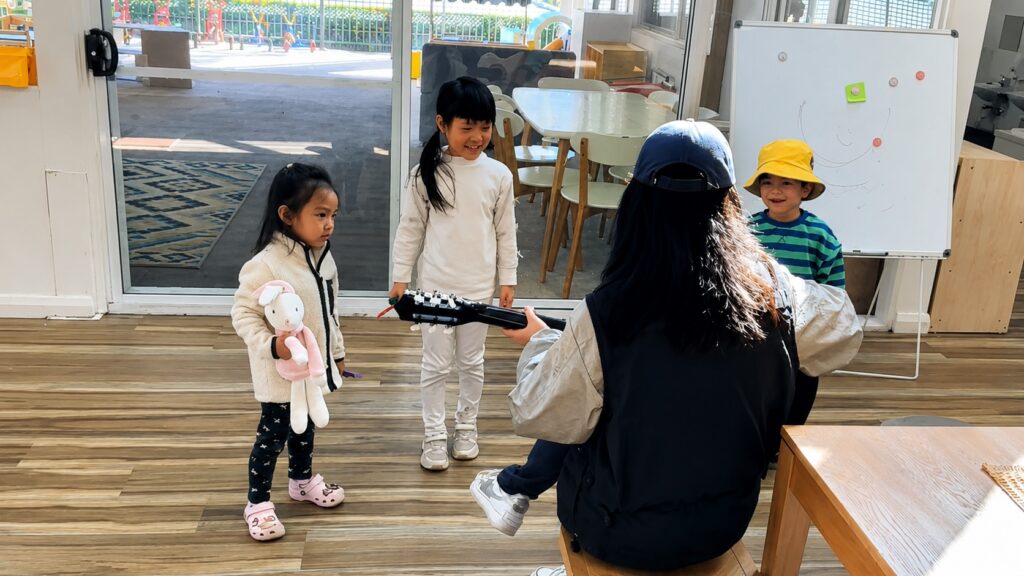
Hands-on experiences can also become social.
Children may work beside one another, exchange materials or become interested in what another child is creating.
This can lead to opportunities for:
- Sharing
- Turn-taking
- Listening
- Cooperation
- Negotiation
- Joint problem-solving
Children do not need to be placed into a formal group activity for social learning to happen. It often develops naturally through shared interests.
The Role of Educators
Educators play an important role in creating environments where curiosity can grow.
This does not mean providing constant instructions.
Instead, educators can observe, listen and respond to what children are already interested in.
They may:
- Add a new resource
- Ask an open-ended question
- Introduce useful vocabulary
- Help children work through a challenge
- Encourage children to explain their thinking
- Give children time to continue an idea
The aim is to support the learning without taking over the experience.
Why Everyday Play Matters
Early learning does not always need to involve elaborate activities.
A tray of natural materials, a collection of animal figures or a set of construction pieces can create many opportunities for discovery.
What matters is how children engage with the experience.
When children are observing, comparing, questioning, testing and creating, they are actively learning.
These experiences can support cognitive, social, emotional and physical development at the same time.
What Parents Can Look For During a Centre Visit
When visiting an early learning centre in Castle Hill, parents can ask how children are encouraged to explore and make choices.
Useful things to observe include:
- Are children actively engaged?
- Are open-ended resources available?
- Do educators ask questions rather than give all the answers?
- Can children explore at their own pace?
- Are natural and sensory materials included?
- Do children have opportunities to solve problems independently?
- Are children encouraged to share their ideas?
These details can give families a better understanding of how learning happens throughout the day.
Curiosity Through Play at Little Lion Castle Hill
At Little Lion Castle Hill, everyday experiences can give children opportunities to explore materials, compare ideas, solve problems and use their imagination.
A simple activity can become meaningful when children are given time to investigate and make their own discoveries.
Final Thoughts
Curiosity is one of the strongest starting points for early learning.
When children are encouraged to explore, make choices and test their ideas, they can develop confidence and important thinking skills through everyday play.
Hands-on experiences help children learn by doing, observing and discovering rather than simply being told.
At Little Lion Castle Hill, these small moments can become valuable opportunities for children to create, communicate and grow.
Book a Tour to explore the learning environment at Little Lion Castle Hill and see how everyday play supports children’s learning and development.
FAQs
1. What is hands-on learning in early childhood?
Hands-on learning involves children actively exploring materials, objects and experiences rather than only listening or watching. It can support curiosity, problem-solving and communication.
2. How does play support problem-solving?
Play gives children opportunities to test ideas, make choices, try different approaches and work out solutions through experience.
3. Why are open-ended materials useful for children?
Open-ended materials can be used in many different ways, allowing children to develop their own ideas and use imagination rather than follow one fixed outcome.
4. How can educators support curiosity?
Educators can observe children’s interests, provide suitable resources, ask open-ended questions and give children time to explore independently.
5. What should parents look for in childcare Castle Hill?
Parents can observe educator interactions, learning environments, opportunities for choice, open-ended play, communication and how engaged children appear in their activities.
6. Can I visit Little Lion Castle Hill before making an enrolment decision?
Families can contact the centre to ask about visiting and Book a Tour to explore the environment in person.